
Hancock County Arrest Log Sources
Hancock County publishes no multi-day booking blotter. The sheriff's office offers no weekly or monthly arrest report either. The practical starting point is the WV DCR current jail search. It shows who is in regional custody right now. It is not a newspaper-style log. After that, a records request to the agency works. The court docket is the other main route. DCR can drop an entry once a person is released, so agency files and docket cases hold up better over time.
Read the Hancock Police Blotter
Work backward from official sources. A news item about Hancock County may describe a citation, a warrant service, an arrest, or a court outcome. None of that proves the person is still in custody.
- Search the DCR jail tool for current regional custody and note the facility and status.
- Identify the sheriff or city police department that made the arrest.
- Ask that agency for its arrest or incident record over a defined date range.
- Search the West Virginia magistrate system for the related case and later court events.
- Review dated local-news summaries only after the official checks.
- For an older event, ask for the relevant commitment-record series and disposition.
New bookings? The Daily Arrest Report is the better stop. A multi-day search should not assume every Hancock arrest started there or moved into a permanent weekly list.
Hancock Arrest Log Entry Fields
No single office publishes the combined Hancock arrest record. DCR tracks custody. Police report the incident and arrest, courts track the case, and news outlets pick which events to summarize.
| Field | Where to verify it |
|---|---|
| Name and event date | Arresting agency, DCR, and court |
| Arresting agency | Police or sheriff report |
| Charges as booked | Booking packet, then compare with filed charges |
| Custody location | DCR jail search or Northern Regional Jail |
| Bond and court date | Magistrate or circuit clerk |
| Photo | Request from custodian; no public county field verified |
| Disposition | Final court docket and clerk records |
A newspaper account works differently. It may drop a middle name, print a home city, or squeeze several charges into one line. Those editorial choices never replace the source report, and a commercial archive can preserve a booking entry long after the case outcome fades from view.
Local Hancock Arrest Reporting
Newspapers fill the gap left by official feeds in Hancock County. Hometown News Cops and Courts covers arrests the old-fashioned way, one article at a time. Its beat has featured a monthly sheriff arrest log for Hancock County. Chester police reports appear too. Warrant stories and court coverage round it out. Nothing there runs continuously like a jail roster. Instead, pieces appear in cycles, so checking back matters.
Two other outlets do similar work. The Review Police & Courts groups its Hancock sheriff arrest summaries by month and date. The Weirton Daily Times writes individual crime and court stories from Hancock and Weirton. A dated article can point you to the right agency or booking. Publication alone cannot tell you whether someone arrested is still in custody today. The Hometown News category page shows that periodic local format.
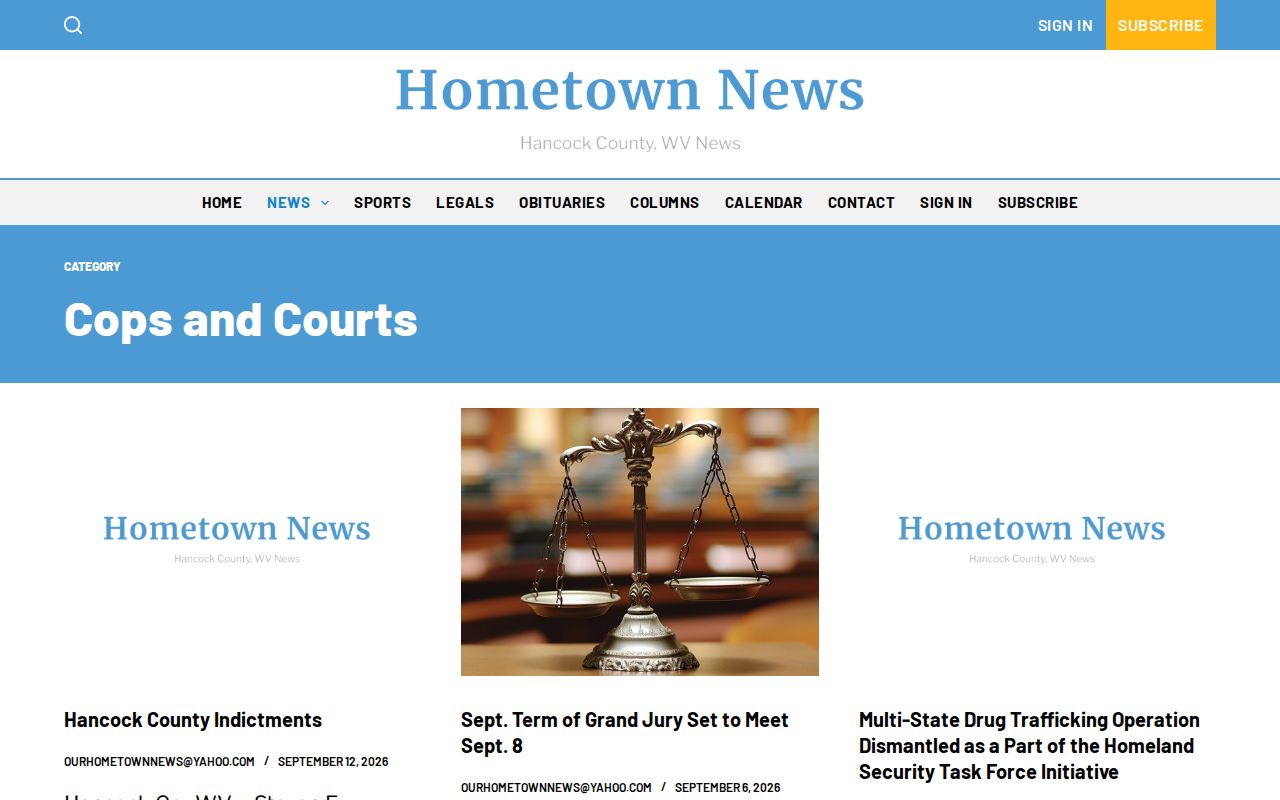
The archive blends formats. Police logs, warrants, and court reports sit side by side, so read each Hancock story in context. Note: An item's publication date can differ from its arrest, booking, or court date.
Weekend Hancock Arrest Reports
Weekend arrests in Hancock County often surface late. Intake at the regional jail can happen hours after the arrest itself. Court offices may not answer until the next business day. A newspaper may bundle several days into one later issue. No official schedule promises a Monday roundup. Use the event date when a source gives both. Think someone is in custody now? Check DCR and VINE first. The arresting agency covers the original police action, while bond, warrants, and case results belong to the court.
Unofficial Hancock Arrest Archives
RecentlyBooked, Busted Newspaper, and Arrests.org all carry Hancock County pages. Names, booking dates, charge labels, and photos show up when available. These are commercial secondary sources, not DCR or the sheriff. A county label can hide the true arresting city. So treat the RecentlyBooked Hancock page as a lead only.
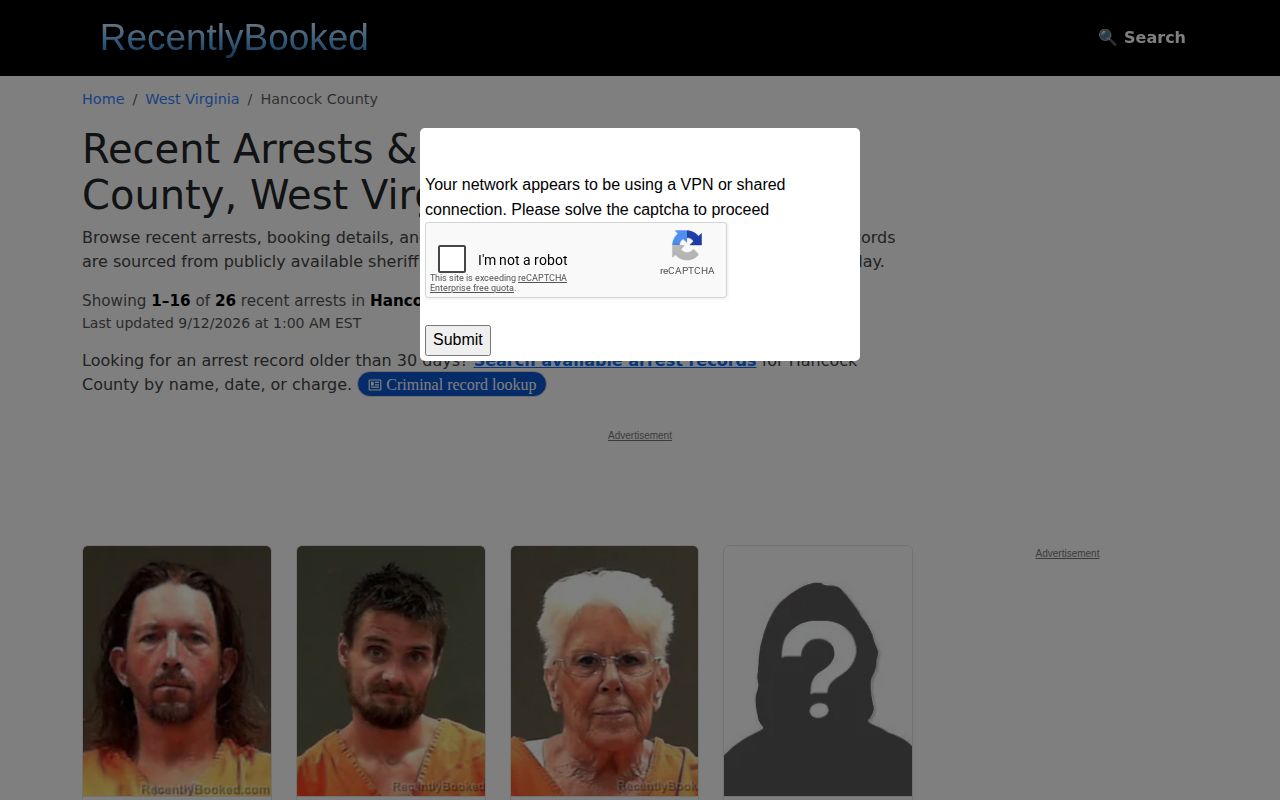
Verify each name and photo against the agency. Deep pagination proves nothing about official retention. A copied entry can be stale, duplicated, or tied to an old custody status. Never take a third-party "released" label as final. A qualifying later outcome belongs to the court record. If an entry is wrong, use the publisher's free correction process rather than a paid intermediary.
Hancock Arrest Archives and Retention
West Virginia's sheriff retention schedule reaches beyond live search. Commitment records stay on file for five years. Older prisoner reports last ten years or until audit. Activities reports cover one year, radio logs two, and unserved warrants follow separate rules. The official sheriff retention schedule governs record series, not what appears on a public website.
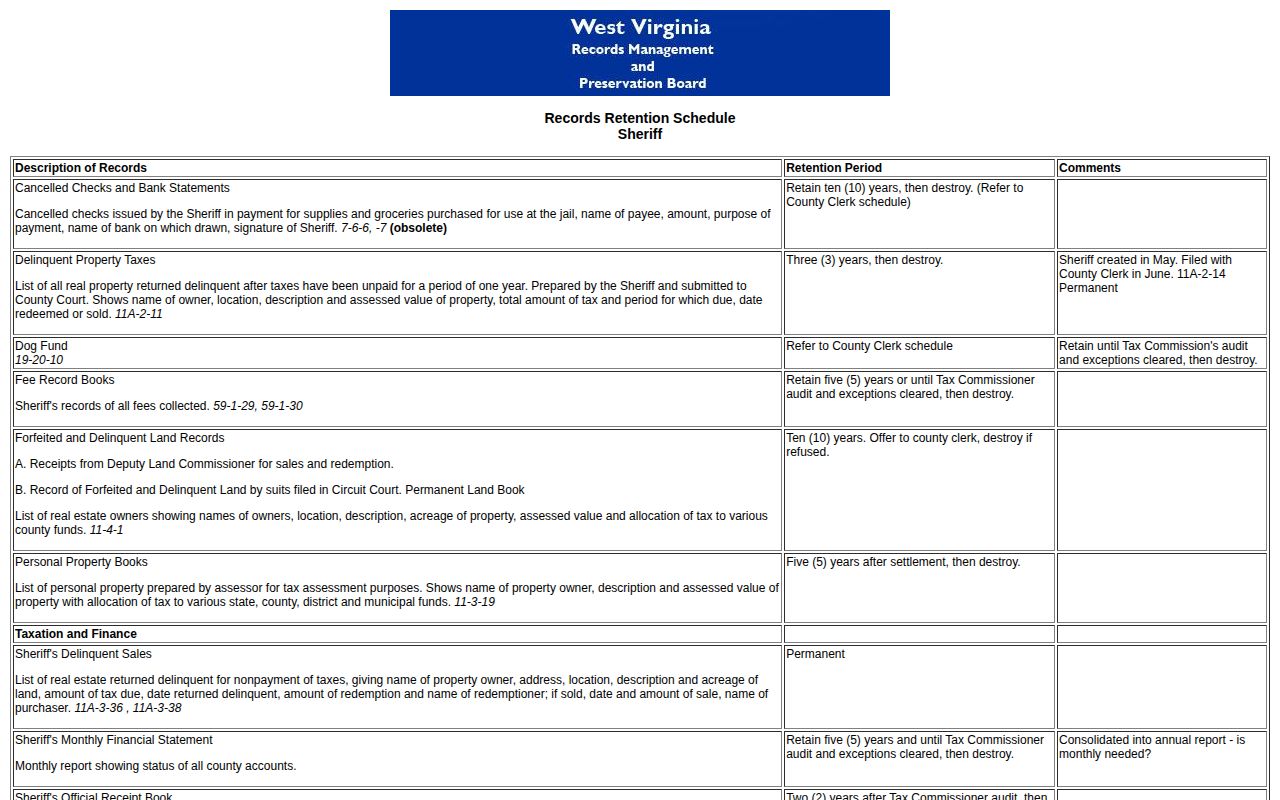
The schedule tells you what to request by series name. It does not promise a modern booking photo stays online. For older material, contact the arresting agency. Ask for the booking or commitment file within a narrow date range. The magistrate or circuit clerk holds the court result. West Virginia Archives and History is a third route if a county series was transferred for appraisal.
Confirm Hancock Arrest Outcomes
Wondering how a Hancock County arrest turned out? The West Virginia Magistrate Record Search is the place to start. Enter a first and last name, or a case number if you have one. It returns a limited set of public case information. Not every document lives online, so call the clerk when you need copies or help reading a result. Felony matters can move up to Hancock Circuit Court once preliminary action wraps up.
A full timeline may run from arrest to booking, initial charge, arraignment, and bond, then through an amended charge, a plea or trial, and the final disposition. Keep in mind that a person can be released from custody while the case is still open. Old news articles also linger online after a dismissal or an acquittal. The court record, not the arrest log, gives you the true endpoint.